

The latest news on global issues
Provided by AGP
In-Depth Interviews | Services, Solution, Research, Method | IMARC Group
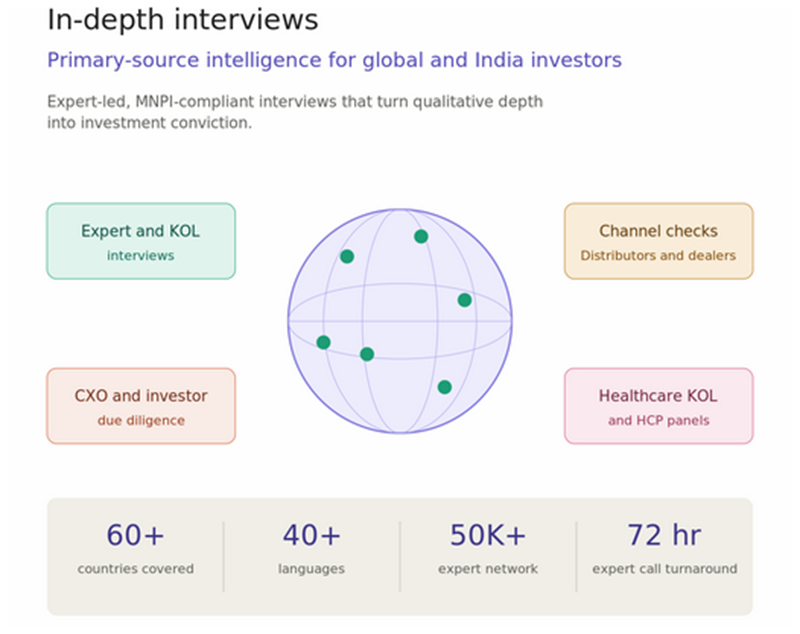
An in-depth interview (IDI) is designed to uncover deep motivations, perceptions, decision-making logic that quantitative surveys, group studies cannot capture.
INDIA, May 15, 2026 /EINPresswire.com/ --An In-Depth Interview (IDI) is a qualitative research method that uses a structured one-on-one conversation between a trained moderator and a high-value respondent, usually lasting 45–90 minutes. It is designed to uncover deep motivations, perceptions, and decision-making logic that quantitative surveys or group studies cannot capture. For global and Indian market investors, IDIs operate as a primary-source intelligence tool that validates management narratives, tests investment theses, and reveals non-public commercial signals across sectors and geographies.
𝐂𝐡𝐚𝐫𝐚𝐜𝐭𝐞𝐫𝐢𝐬𝐭𝐢𝐜𝐬 𝐨𝐟 𝐈𝐃𝐈𝐬
• One-on-one format with uninterrupted dialogue.
• Semi-structured discussion guide balancing consistency with adaptive probing.
• Narrative depth rather than yes/no responses.
• Small, hand-picked sample of 10–30 high-value respondents.
• Confidentiality-first protocols with NDAs and anonymised reporting.
𝐓𝐲𝐩𝐞𝐬 𝐨𝐟 𝐈𝐃𝐈𝐬
• Expert & KOL Interviews — industry veterans, ex-executives, regulators, key opinion leaders.
• Customer-Voice IDIs — end-users, enterprise buyers, decision-makers.
• Executive & CXO IDIs — CFO, CMO, CIO perspectives for B2B insight.
• Channel-Check IDIs — distributors, dealers, super-stockists for share validation.
• Patient & HCP IDIs — healthcare-specific qualitative deep dives.
• Investor-Grade Due-Diligence IDIs — MNPI-compliant expert calls for PE, VC, and hedge funds.
𝐁𝐞𝐧𝐞𝐟𝐢𝐭𝐬 𝐨𝐟 𝐂𝐨𝐧𝐝𝐮𝐜𝐭𝐢𝐧𝐠 𝐈𝐧-𝐃𝐞𝐩𝐭𝐡 𝐈𝐧𝐭𝐞𝐫𝐯𝐢𝐞𝐰𝐬 (𝐈𝐃𝐈)
𝐒𝐭𝐫𝐚𝐭𝐞𝐠𝐢𝐜 & 𝐈𝐧𝐬𝐢𝐠𝐡𝐭 𝐁𝐞𝐧𝐞𝐟𝐢𝐭𝐬
• Depth over breadth — uncovers underlying motivations, emotional drivers, and trade-off logic that surveys reduce to scale points.
• Adaptive probing — moderators can chase unexpected disclosures in real time, surfacing insights no fixed questionnaire could anticipate.
• Unmet-need discovery — reveals white-space opportunities, product gaps, and friction points that competitors haven't addressed.
• Hypothesis generation and stress-testing — IDIs both create new hypotheses and rigorously challenge existing investment or product theses.
• Triangulation power — qualitative depth strengthens and contextualises quantitative survey findings, alt-data, and syndicated research.
𝐀𝐜𝐜𝐞𝐬𝐬 & 𝐀𝐮𝐝𝐢𝐞𝐧𝐜𝐞 𝐁𝐞𝐧𝐞𝐟𝐢𝐭𝐬
• Reach to hard-to-engage respondents — CXOs, board members, HNWIs, KOLs, and regulators who refuse surveys but accept private interviews.
• Comfort with sensitive subjects — confidential one-on-one format encourages honest disclosure on governance, pricing, regulatory exposure, and
𝐩𝐞𝐫𝐬𝐨𝐧𝐚𝐥 𝐟𝐢𝐧𝐚𝐧𝐜𝐞𝐬.
• Stakeholder-specific perspectives — separate B2B IDIs with buyers, influencers, and end-users prevent dominant-voice bias.
• Niche audience tap — physicians, channel partners, ex-employees, and industry veterans whose perspectives change valuations.
𝐈𝐧𝐯𝐞𝐬𝐭𝐨𝐫-𝐒𝐩𝐞𝐜𝐢𝐟𝐢𝐜 𝐁𝐞𝐧𝐞𝐟𝐢𝐭𝐬
• Alpha generation — non-public, primary-source signal feeds differentiated investment views.
• De-risked diligence — channel checks and ex-management IDIs surface governance, churn, and supply-chain red flags pre-deal.
• Faster conviction — investment committees move quicker when qualitative evidence corroborates the financial model.
• MNPI-clean intelligence — compliant expert calls deliver edge without regulatory exposure.
• Post-investment value protection — quarterly customer and channel IDIs catch deterioration early.
• Exit storytelling — verbatim customer quotes strengthen IPO prospectuses and strategic-sale teasers.
𝐎𝐩𝐞𝐫𝐚𝐭𝐢𝐨𝐧𝐚𝐥 & 𝐌𝐞𝐭𝐡𝐨𝐝𝐨𝐥𝐨𝐠𝐢𝐜𝐚𝐥 𝐁𝐞𝐧𝐞𝐟𝐢𝐭𝐬
• Cost-efficient for specialised topics — cheaper per insight than full-scale quantitative studies when the population is small or elite.
• Cultural sensitivity — native-language IDIs eliminate cross-cultural distortion that surveys cannot detect.
• Verbatim evidence — quote banks become reusable assets for marketing, fundraising, and internal alignment.
• Iterative learning — early IDIs sharpen subsequent screener and survey design.
• Long-term respondent relationships — repeat KOL engagement builds an institutional intelligence asset.
𝐖𝐡𝐞𝐧 𝐭𝐨 𝐔𝐬𝐞 𝐈𝐃𝐈𝐬
• Pre-investment due diligence — commercial, customer, and management.
• Market-entry validation in unfamiliar geographies.
• Pricing and willingness-to-pay studies.
• Sensitive or complex topics where group dynamics inhibit candour.
• Post-investment value-creation and quarterly monitoring.
• M&A target evaluation, IPO readiness, and exit preparation.
𝐏𝐫𝐨𝐜𝐞𝐬𝐬 𝐨𝐟 𝐈𝐧-𝐃𝐞𝐩𝐭𝐡 𝐈𝐧𝐭𝐞𝐫𝐯𝐢𝐞𝐰𝐬 (𝐈𝐃𝐈) — 𝐒𝐭𝐞𝐩 𝐛𝐲 𝐒𝐭𝐞𝐩
A complete, audit-ready IDI engagement runs across five phases and twenty discrete steps.
𝐏𝐡𝐚𝐬𝐞 𝟏 — 𝐏𝐥𝐚𝐧𝐧𝐢𝐧𝐠 & 𝐃𝐞𝐬𝐢𝐠𝐧
1. Objective alignment — clarify the investment thesis, business question, or research hypothesis to be tested.
2. Audience and stakeholder mapping — identify the precise respondent profiles whose voices matter most.
3. Screener design — build the qualification criteria (role, tenure, experience, sector exposure, non-conflict).
4. Sample-size planning — define how many IDIs are required per segment to reach saturation.
5. Discussion-guide drafting — semi-structured guide with opening warm-up, core probes, scenario tests, and closing questions.
𝐏𝐡𝐚𝐬𝐞 𝟐 — 𝐑𝐞𝐜𝐫𝐮𝐢𝐭𝐦𝐞𝐧𝐭 & 𝐋𝐨𝐠𝐢𝐬𝐭𝐢𝐜𝐬
6. Respondent sourcing — tap proprietary panels, expert networks, and localised recruitment partners.
7. Vetting & compliance screening — credential verification, conflict-of-interest declarations, frequency-cap checks.
8. Scheduling & consent capture — confirm date, channel (video/voice/in-person), and obtain written informed consent.
9. Moderator briefing — sector context, target-company background, and key probing areas walked through with the interviewer.
10. Pilot interview — one or two trial IDIs to refine the guide before full rollout.
𝐏𝐡𝐚𝐬𝐞 𝟑 — 𝐈𝐧𝐭𝐞𝐫𝐯𝐢𝐞𝐰 𝐄𝐱𝐞𝐜𝐮𝐭𝐢𝐨𝐧
11. Rapport building — first 5–10 minutes to establish trust, confirm confidentiality, and frame the conversation.
12. Structured probing — moderator follows the guide while adapting to respondent disclosures.
13. Active listening and laddering — use of "why" and "tell me more" probes to reach root motivations.
14. Recording and contemporaneous note-taking — audio/video with consent, plus moderator's parallel observation notes.
𝐏𝐡𝐚𝐬𝐞 𝟒 — 𝐀𝐧𝐚𝐥𝐲𝐬𝐢𝐬 & 𝐒𝐲𝐧𝐭𝐡𝐞𝐬𝐢𝐬
15. Verbatim transcription — with 98%+ accuracy SLA, plus translation where applicable.
16. Coding framework development — pre-defined thematic codes plus emergent codes that arise during reading.
17. Thematic and sentiment analysis — application of grounded-theory, framework, or narrative methods, augmented by AI sentiment tools.
18. Cross-respondent triangulation — comparing themes across segments, geographies, and respondent types.
𝐏𝐡𝐚𝐬𝐞 𝟓 — 𝐑𝐞𝐩𝐨𝐫𝐭𝐢𝐧𝐠 & 𝐀𝐜𝐭𝐢𝐯𝐚𝐭𝐢𝐨𝐧
19. Insight synthesis and implications drafting — translate themes into "so-what" and "now-what" recommendations.
20. Executive deliverables and debrief — deliver the report, theme matrix, quote bank, dashboard access, and run a strategy workshop.
𝐊𝐞𝐲 𝐅𝐞𝐚𝐭𝐮𝐫𝐞𝐬 𝐁𝐥𝐨𝐜𝐤
• Rich narrative data with verbatim quotes and emotional context.
• Real-time probing that adapts to respondent disclosures.
• AI-embedded dashboard for sentiment, theme, and quote retrieval.
• Speed-to-insight of 24–72 hours for hedge-fund-grade single expert calls.
• Global moderator bench with native-language and sector specialists.
𝐇𝐨𝐰 𝐭𝐨 𝐂𝐨𝐧𝐝𝐮𝐜𝐭 𝐈𝐧-𝐃𝐞𝐩𝐭𝐡 𝐈𝐧𝐭𝐞𝐫𝐯𝐢𝐞𝐰𝐬
1. Define investment thesis or research objective and key hypotheses.
2. Build a tight screener and recruit qualified respondents.
3. Develop a semi-structured discussion guide.
4. Brief and train moderators on the sector and target context.
5. Conduct the interview, recording with explicit consent.
6. Transcribe verbatim and apply thematic coding.
7. Synthesise insights into an implications-led report.
𝐈𝐧𝐬𝐢𝐠𝐡𝐭𝐬 𝐟𝐨𝐫 𝐆𝐥𝐨𝐛𝐚𝐥 𝐈𝐧𝐯𝐞𝐬𝐭𝐨𝐫𝐬
• Lifecycle use — deal sourcing, pre-investment diligence, value creation, exit preparation.
• Sector sweet spots — healthcare, SaaS, industrials, energy transition, BFSI.
• Compliance critical — SEC/FCA MNPI rules, conflict-of-interest screening, audit trails.
• Compressed timelines — hedge funds: 24–72 hours; PE diligence: 2–6 weeks; M&A diligence: 4–8 weeks.
• Measurable impact — 15–25% uplift in diligence accuracy, 20–30% reduction in post-deal regret, 2–4x deal-sourcing yield when IDIs are embedded in screening.
• Alt-data complement — pairing IDIs with quantitative alternative data delivers a complete "what plus why" intelligence layer.
𝐈𝐧𝐬𝐢𝐠𝐡𝐭𝐬 𝐟𝐨𝐫 𝐈𝐧𝐝𝐢𝐚-𝐌𝐚𝐫𝐤𝐞𝐭 𝐈𝐧𝐯𝐞𝐬𝐭𝐨𝐫𝐬
• Linguistic reach — 22 official languages; Tier-2/3 insights require native moderation in Hindi, Tamil, Telugu, Bengali, Marathi, Gujarati, Kannada, Malayalam.
• Promoter-driven economy — over 70% of listed companies have concentrated promoter holdings; governance signals come from informal IDIs, not annual reports.
• Tier-segmentation — consumption, brand awareness, and digital adoption diverge sharply across metro, Tier-2, Tier-3, and rural India; national averages mislead.
• Sector hotspots — BFSI and fintech, healthcare and CDMOs, EV and mobility, PLI-led electronics and pharma manufacturing, quick-commerce and D2C, agritech, Tier-2 commercial real estate.
• Regulatory navigation — DPDP Act 2023, SEBI insider-trading and research-analyst norms, FEMA-compliant cross-border vendor structures.
• Investor outcomes — 30–40% improvement in market-size validation, 20–25% reduction in distribution-channel surprises, 2–3 weeks faster time-to-conviction.
• Personas served — global PE funds (KKR, Blackstone, Bain, Carlyle, TPG), domestic PE/VC (ChrysCapital, Multiples, Kedaara, Peak XV), sovereign wealth funds, family offices, EM hedge funds, and DFIs.
𝐆𝐚𝐢𝐧 𝐢𝐧𝐬𝐢𝐠𝐡𝐭𝐬 𝐢𝐧𝐭𝐨 𝐜𝐨𝐧𝐬𝐮𝐦𝐞𝐫 𝐦𝐨𝐭𝐢𝐯𝐚𝐭𝐢𝐨𝐧𝐬 𝐚𝐧𝐝 𝐬𝐭𝐚𝐤𝐞𝐡𝐨𝐥𝐝𝐞𝐫 𝐩𝐞𝐫𝐬𝐩𝐞𝐜𝐭𝐢𝐯𝐞𝐬: https://www.imarcgroup.com/services/in-depth-interviews
𝐈𝐧𝐝𝐮𝐬𝐭𝐫𝐲 𝐂𝐨𝐯𝐞𝐫𝐚𝐠𝐞 𝐁𝐥𝐨𝐜𝐤
IMARC's IDI capability spans BFSI, healthcare and pharmaceuticals, FMCG and retail, food and beverages, technology and media, energy and mining, agriculture, automotive and EV, construction and manufacturing, electronics and semiconductors, packaging, and transport and logistics. Each engagement is calibrated to sector-specific KPIs and investor lenses.
𝐁𝟐𝐁 & 𝐁𝟐𝐂 𝐔𝐬𝐞-𝐂𝐚𝐬𝐞𝐬
• B2B applications — enterprise strategy, M&A diligence, R&D and innovation, channel-partner diligence, supplier-base mapping, IT-buyer journey.
• B2C applications — brand perception, premiumisation, Gen Z and Millennial behaviour, omnichannel friction, pricing and willingness-to-pay.
• PE and hedge fund applications — channel checks, expert calls, portfolio-company monitoring.
• Consulting and advisory applications — market sizing, competitive intelligence, best-practice benchmarking, regulatory anticipation.
𝐑𝐞𝐜𝐫𝐮𝐢𝐭𝐦𝐞𝐧𝐭 & 𝐀𝐮𝐝𝐢𝐞𝐧𝐜𝐞 𝐀𝐜𝐜𝐞𝐬𝐬 𝐁𝐥𝐨𝐜𝐤
• CXOs, HNWIs, subject-matter experts, opinion leaders, and industry veterans.
• Asset managers, hedge-fund managers, bankers, and investment professionals for peer intelligence.
• Healthcare KOLs and HCPs across therapeutic specialties.
• Distributors, dealers, and channel partners across Indian and global geographies.
• Pre-vetted respondent panel with credential verification and frequency caps that eliminate "professional respondents".
𝐓𝐫𝐚𝐧𝐬𝐜𝐫𝐢𝐩𝐭𝐢𝐨𝐧 & 𝐀𝐧𝐚𝐥𝐲𝐬𝐢𝐬 𝐁𝐥𝐨𝐜𝐤
• Verbatim transcription with a 98%+ accuracy service-level commitment.
• Thematic coding using framework, narrative, and grounded-theory approaches.
• AI-powered sentiment and emotion analytics.
• Dual-coder reliability checks for objectivity.
• Ready-to-use quote bank and theme matrix mapped to investment-thesis questions.
𝐃𝐞𝐭𝐚𝐢𝐥𝐞𝐝 𝐃𝐞𝐥𝐢𝐯𝐞𝐫𝐚𝐛𝐥𝐞𝐬 𝐂𝐚𝐭𝐚𝐥𝐨𝐠𝐮𝐞
• De-identified verbatim transcripts.
• Audio and video recordings where consent permits.
• Theme matrix and quote bank.
• Sentiment-coded insight summaries.
• Executive PPT with implications and recommendations.
• Interactive AI insights dashboard, optional.
• Investor-ready synthesis decks formatted for Investment Committee review.
𝐃𝐚𝐭𝐚 𝐏𝐫𝐢𝐯𝐚𝐜𝐲, 𝐄𝐭𝐡𝐢𝐜𝐬 & 𝐂𝐨𝐦𝐩𝐥𝐢𝐚𝐧𝐜𝐞 𝐋𝐚𝐲𝐞𝐫
• Frameworks honoured — GDPR (EU), HIPAA (US healthcare), CCPA (California), PIPL (China), DPDP Act 2023 (India).
• Certifications — ISO 27001 information security, ISO 20252 market research, ESOMAR membership.
• Investor compliance — MNPI screening, SEC/FCA/SEBI alignment, audit-trail logging.
• Ethical safeguards — informed consent, anonymisation, opt-out rights, conflict-of-interest declarations.
• Confidentiality firewall — mutual NDAs with respondents and moderators, double-blind reporting where required.
𝐂𝐚𝐬𝐞 𝐒𝐭𝐮𝐝𝐢𝐞𝐬 / 𝐒𝐮𝐜𝐜𝐞𝐬𝐬 𝐒𝐭𝐨𝐫𝐢𝐞𝐬
• Global PE commercial diligence — 18 customer IDIs for a SaaS target revealed a 22% churn under-reporting risk that triggered a price renegotiation.
• India hedge-fund channel check — 25 distributor IDIs across seven states uncovered inventory-stuffing patterns at a listed consumer-staples company.
• Sovereign-wealth-fund expert calls — 15 KOL IDIs validated India's renewable-energy capacity-build timelines, supporting a USD 400 million allocation.
• Family-office healthcare diligence — 12 physician and patient IDIs across Tier-2 India confirmed unit-economics for a single-specialty hospital chain.
𝐄𝐦𝐞𝐫𝐠𝐢𝐧𝐠 𝐓𝐫𝐞𝐧𝐝𝐬 𝐢𝐧 𝐈𝐧-𝐃𝐞𝐩𝐭𝐡 𝐈𝐧𝐭𝐞𝐫𝐯𝐢𝐞𝐰𝐬 (𝐈𝐃𝐈)
𝐓𝐞𝐜𝐡𝐧𝐨𝐥𝐨𝐠𝐲 & 𝐀𝐈 𝐓𝐫𝐞𝐧𝐝𝐬
• Generative-AI-assisted synthesis — large language models produce first-pass thematic summaries, accelerating analysis by 40–60% while humans validate.
• Real-time AI transcription and translation — same-day delivery of multilingual transcripts during cross-border IDI projects.
• Sentiment, emotion and voice-biometrics analytics — algorithmic detection of stress, conviction, and hesitation in respondent speech.
• AI-powered respondent profiling — pre-interview enrichment with public-source data sharpens probing strategy.
• Conversational AI co-pilots — moderators are increasingly supported by live AI prompts suggesting follow-up questions.
• Synthetic-respondent simulations — early-stage use of LLMs to stress-test discussion guides before live IDIs (still emerging, used cautiously).
𝐅𝐨𝐫𝐦𝐚𝐭 & 𝐃𝐞𝐥𝐢𝐯𝐞𝐫𝐲 𝐓𝐫𝐞𝐧𝐝𝐬
• Asynchronous video IDIs — respondents record video answers on their own time, expanding access to time-poor CXOs.
• Hybrid in-person plus virtual — combining the depth of face-to-face with the reach of remote moderation.
• Mobile-ethnography fusion — respondents capture in-context photos or short videos before an IDI to ground the conversation in lived reality.
• AR and VR product testing — emerging in CPG, automotive, and healthcare to test concepts mid-interview.
• Voice-only IDIs for sensitive cohorts — increasingly used for stigma-prone subjects (finance distress, healthcare).
𝐈𝐧𝐯𝐞𝐬𝐭𝐨𝐫 & 𝐂𝐨𝐦𝐩𝐥𝐢𝐚𝐧𝐜𝐞 𝐓𝐫𝐞𝐧𝐝𝐬
• Investor-grade compliance platforms — automated MNPI screening, SEC/FCA/SEBI audit logs, and conflict-of-interest digital attestations.
• Compressed turnarounds for hedge funds — 24-hour expert IDIs now the norm; "fast-twitch" IDIs becoming a sub-product category.
• Embedded retainer models — investors increasingly buy IDI subscriptions instead of one-off projects, enabling continuous portfolio monitoring.
• Mixed-methods diligence — IDIs paired with alt-data, web-scraped channel data, and consumer panels for layered conviction.
• Investor-IDI desks — boutique units dedicated to PE, VC, hedge fund, and sovereign-wealth clients with their own SLAs.
𝐀𝐮𝐝𝐢𝐞𝐧𝐜𝐞 & 𝐑𝐞𝐜𝐫𝐮𝐢𝐭𝐦𝐞𝐧𝐭 𝐓𝐫𝐞𝐧𝐝𝐬
• DEI-conscious recruitment — explicit quotas for gender, ethnicity, and tier-of-city representation in B2C IDIs.
• Tier-2/3 India focus — recruitment partners expanding into smaller cities as India's consumption story moves beyond metros.
• Healthcare KOL democratisation — beyond top academic KOLs, increased weight on community physicians and patient advocates.
• Channel-partner IDIs — distributors, sub-distributors, and dealers as the new diligence frontier, especially in EM markets.
• Frequency-cap discipline — stronger industry pushback against "professional respondents" through panel rotation.
𝐑𝐞𝐠𝐮𝐥𝐚𝐭𝐨𝐫𝐲 & 𝐄𝐭𝐡𝐢𝐜𝐚𝐥 𝐓𝐫𝐞𝐧𝐝𝐬
• Privacy-by-design — global rollout of DPDP (India), state-level US privacy laws, and PIPL (China) reshaping consent and storage.
• Zero-trust data security — end-to-end encrypted recording platforms and segmented client data rooms.
• Anti-deepfake protocols — verification of respondent identity to prevent fraudulent expert participation.
• Granular consent management — respondents now consent separately to recording, transcription, AI processing, and quote attribution.
• ESG-aligned research practices — fair compensation for respondents, accessibility accommodations, and sustainability in travel for in-person IDIs.
𝐁𝐮𝐲𝐞𝐫-𝐁𝐞𝐡𝐚𝐯𝐢𝐨𝐮𝐫 𝐓𝐫𝐞𝐧𝐝𝐬
• Decision-makers want dashboards, not decks — clients increasingly demand live AI dashboards over static PPT reports.
• Quote-bank monetisation — verbatim quotes flowing into marketing, sales enablement, and investor materials.
• Embedded learning programmes — clients want ongoing IDIs feeding into customer-experience and product-management rhythms, not one-shot studies.
• Tier-2 EM investor demand — beyond India and China, growing IDI demand from investors targeting Vietnam, Indonesia, Saudi Arabia, Nigeria, and Mexico.
𝐊𝐞𝐲 𝐓𝐚𝐤𝐞𝐚𝐰𝐚𝐲𝐬 𝐨𝐟 𝐈𝐧-𝐃𝐞𝐩𝐭𝐡 𝐈𝐧𝐭𝐞𝐫𝐯𝐢𝐞𝐰 (𝐈𝐃𝐈)
• IDIs convert qualitative depth into investor-grade conviction.
• Primary-source intelligence reduces deal regret and surfaces alpha.
• India and emerging markets demand IDIs due to linguistic and tier complexity.
• Compliance-grade execution is non-negotiable for institutional investors.
• AI-augmented analysis compresses time-to-insight without sacrificing depth.
𝐓𝐡𝐞 𝐂𝐫𝐮𝐜𝐢𝐚𝐥 𝐑𝐨𝐥𝐞 𝐨𝐟 𝐈𝐃𝐈𝐬 𝐢𝐧 𝐌𝐚𝐫𝐤𝐞𝐭 𝐑𝐞𝐬𝐞𝐚𝐫𝐜𝐡
IDIs occupy the highest-value layer of the qualitative research stack. While surveys deliver scale and focus groups capture group dynamics, only IDIs unlock the why behind decisions, the unspoken hesitations in B2B sales cycles, and the first-hand operating reality of channel partners and end-users. For global capital deploying into India and other emerging markets — where data asymmetry is structurally higher — IDIs convert information gaps into investment edge. They are the connective tissue between desk research and conviction, and the single most underutilised lever in many institutional diligence playbooks.
𝐖𝐡𝐲 𝐂𝐡𝐨𝐨𝐬𝐞 𝐈𝐌𝐀𝐑𝐂 𝐟𝐨𝐫 𝐘𝐨𝐮𝐫 𝐈𝐧-𝐃𝐞𝐩𝐭𝐡 𝐈𝐧𝐭𝐞𝐫𝐯𝐢𝐞𝐰𝐬?
• Investor-grade methodology with MNPI compliance and audit-ready documentation.
• Global expert network spanning CXOs, KOLs, and channel partners across 60+ countries.
• Unmatched India depth across Tier-2/3 markets and regional languages.
• AI-embedded insights dashboard for live retrieval, sentiment tracking, and theme search.
• Speed and flexibility — single expert calls in 72 hours, pilots in 4 weeks, full programmes in 8–12 weeks.
• Sustained partnership model with continuous monitoring and quarterly refresh programmes.
𝗖𝗼𝗻𝘁𝗮𝗰𝘁 𝗨𝘀: https://www.imarcgroup.com/contact-us
𝗘𝗺𝗮𝗶𝗹: sales@imarcgroup.com
Elena Anderson
IMARC Services Private Limited
+1 201-971-6302
email us here
Legal Disclaimer:
EIN Presswire provides this news content "as is" without warranty of any kind. We do not accept any responsibility or liability for the accuracy, content, images, videos, licenses, completeness, legality, or reliability of the information contained in this article. If you have any complaints or copyright issues related to this article, kindly contact the author above.
